The engineering behind the platform.
AECAI combines field-tested computer vision models, large language models with engineering guard-rails, and secure UK-hosted infrastructure — built specifically for structural inspection.
Computer vision tuned for concrete defects.
The AECAI CV engine is trained on CODEBRIM and CrackForest open research datasets and fine-tuned on AECAI’s proprietary annotated inspection imagery. It classifies cracking, spalling, delamination, exposed reinforcement, and staining — outputting bounding boxes, segmentation masks, severity bands, and visible-extent estimates.
- Cracking — width and pattern classification
- Spalling — area and depth estimation
- Delamination — hollow-sounding area mapping
- Exposed reinforcement — bar count and condition
- Staining — type and extent
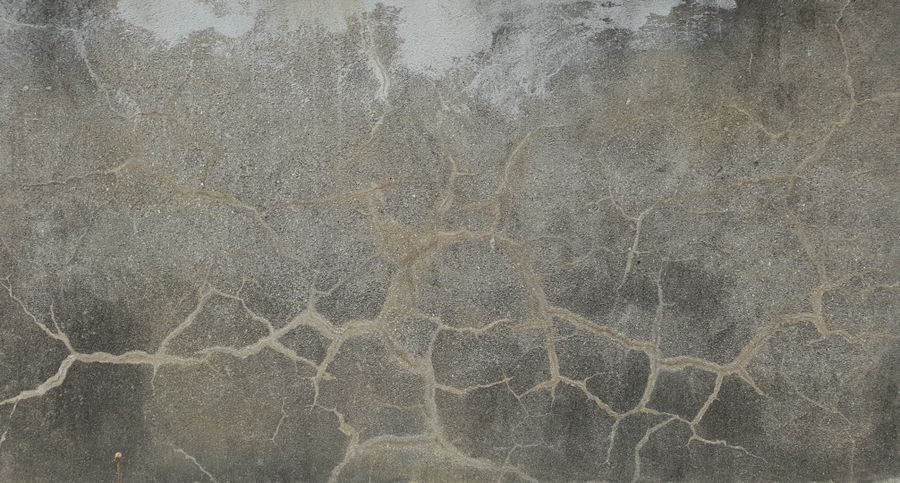
Illustrative bounding-box annotation output from the CV engine
Engineering-grade language, not generic AI prose.
AECAI uses a rules-driven preset commentary library, with entries selected by defect type and severity. A large language model (Claude) assembles the narrative under controlled, engineering-specific prompts — aligned with BD 63 (now CS 450), CS 454, and common UK inspection practice.
Every output is reviewed and signed off by the client engineer before issue. The platform generates reports; engineers own them.
- Rules-driven commentary library by defect class and severity
- Consistent technical language aligned with industry standards
- Engineer review gate before any report is issued
- Full edit capability — override any AI-generated text

Engineer-in-the-loop by design.
The review gate is not an optional feature — it is built into every data flow in the platform.
Mobile App
Offline-first field capture
Cloud API
Secure UK-hosted infrastructure
CV Inference
Defect detection engine
Engineer Review
In-the-loop approval gate
Report Engine
Standards-aligned generation
Final Report
Word / PDF output
Engineer-in-the-loop review is built into the architecture — not bolted on.
Your data. Your control.
AECAI is built to meet the data governance requirements of UK public sector and regulated engineering clients.
UK GDPR compliant
Data Processing Agreement provided with every client engagement. Your data is handled in accordance with UK GDPR at all times.
UK-hosted infrastructure
All inspection data is stored and processed within UK / EU regions. Your data never leaves the jurisdiction.
Default 7-day retention
Inspection images are deleted after report delivery unless a longer retention period is explicitly agreed in writing.
No training without consent
Client images are never used to train or fine-tune models without explicit written agreement. Your data is yours.
Built on peer-reviewed datasets.
The CV models are not black boxes — they are trained on documented, publicly available research datasets and AECAI’s own growing annotated library.
CODEBRIM
A public concrete bridge defect dataset containing over 6,000 annotated images across six defect classes including cracking, spalling, efflorescence, and exposed reinforcement. Used as the foundation for supervised pre-training.
CrackForest
A pavement and concrete crack segmentation dataset with pixel-level annotations. Provides fine-grained crack geometry data for segmentation mask training.
AECAI Proprietary Dataset
A growing collection of 3,000–5,000+ annotated real-world inspection images from UK and Ireland structures. Fine-tuning dataset developed with practising structural engineers — and expanding with every inspection.
Ready to see AECAI on a live project?
Free demonstration inspection. No commitment. We'll show you the whole workflow on your own data.