From site photograph to finished report, with the engineer in the loop.
AECAI reads an inspector’s photographs, flags the defects and drafts the structural report, ready for your engineers to check, edit and issue.
Built by two engineers, and now in early access.
Example Road Bridge (fictional)
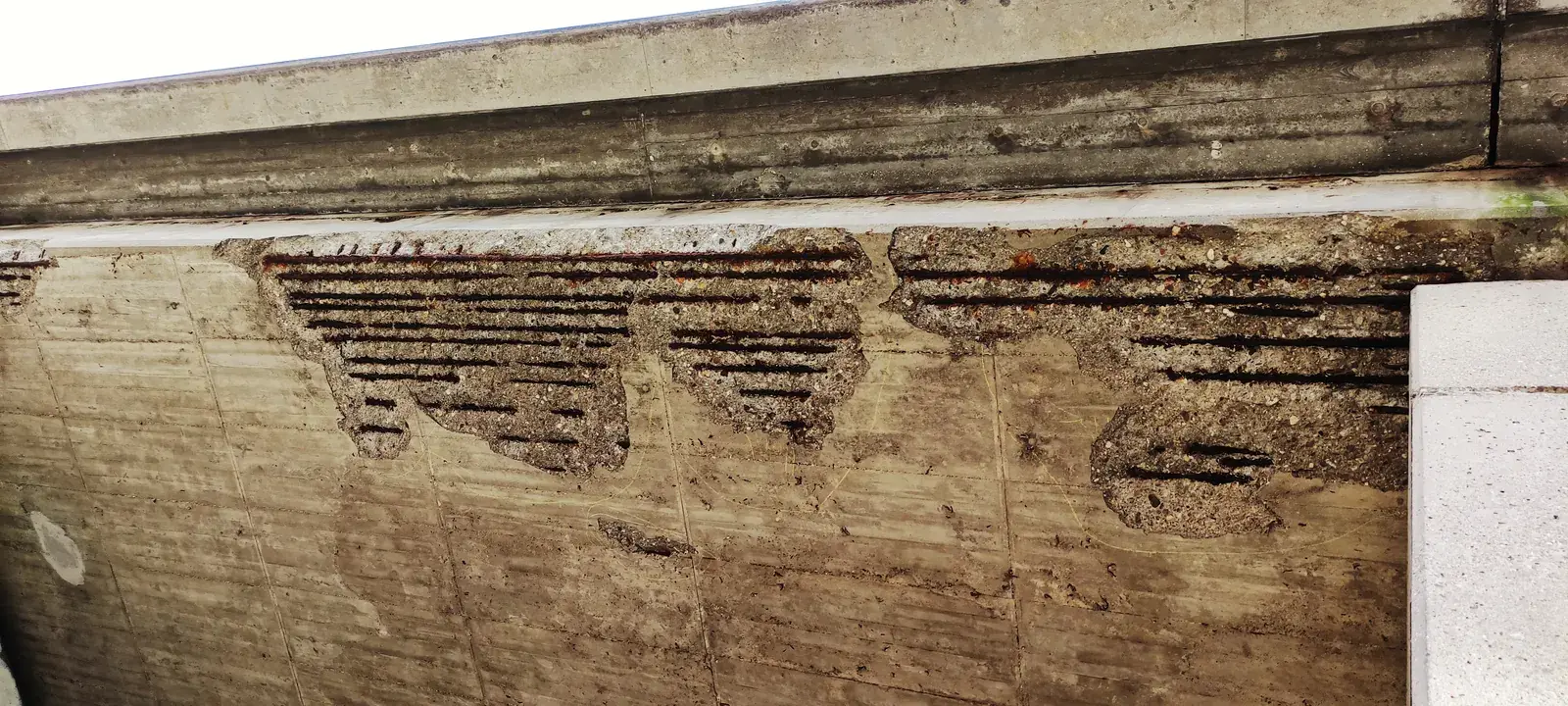
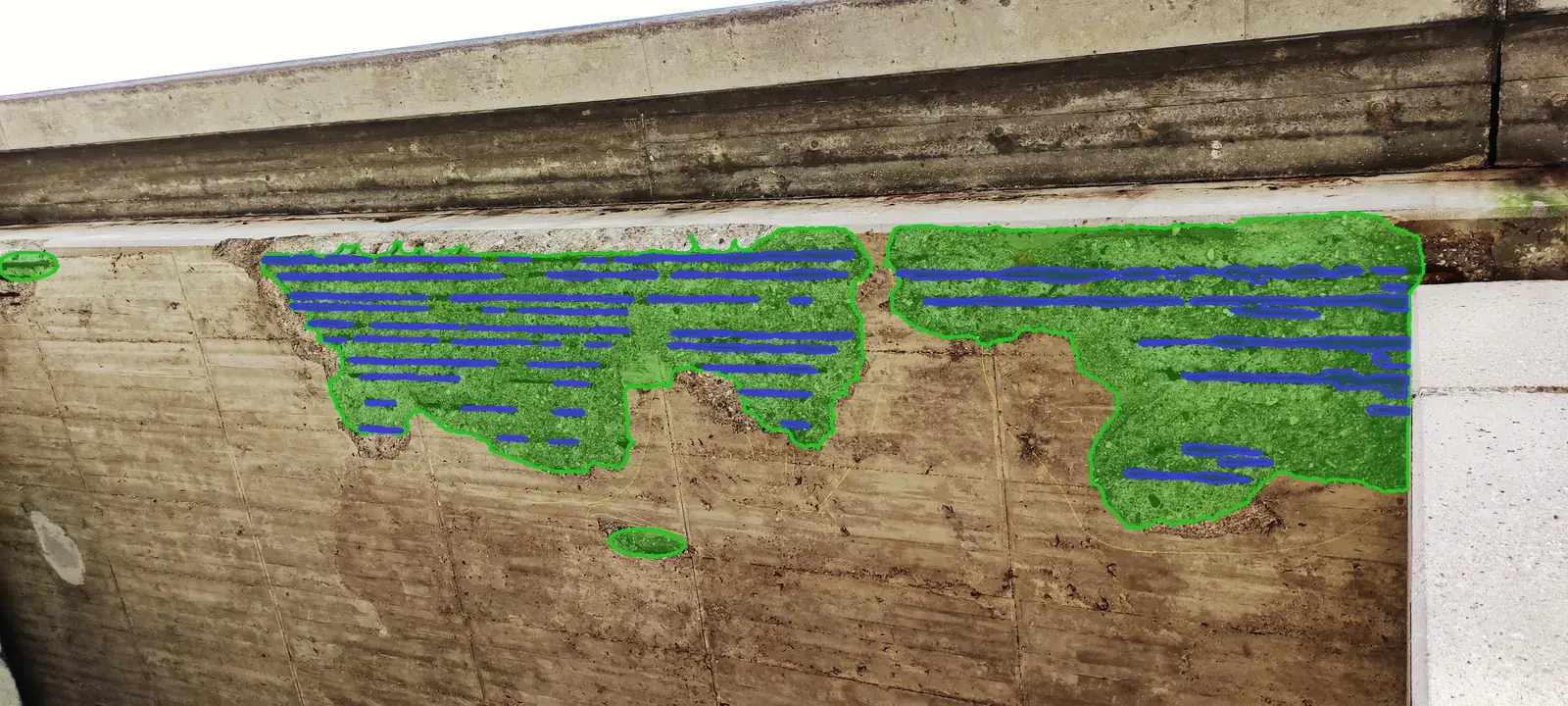
3.2 Deck edge, north elevation
Two long spalls along the edge beam below the cornice expose rows of heavily corroded bars. Loose concrete at the spall edges to be made safe; extent to be confirmed by hammer survey.


Fig. 4 Deck edge, north elevation. Spalling (green) and exposed bars (blue) masked by AECAI.
| Element | Finding | Raised by | Engineer |
|---|---|---|---|
| Edge beam | Spalling | AI | Accepted |
| Edge beam | Exposed bars | AI | Accepted |
| Bearing shelf | Debris | Engineer | Added |
3.3 Recommendations
- Make the spall edges safe now: loose concrete could fall on the road below.
- Break out to sound concrete, treat or replace the bars and reinstate the cover.
- Clear the debris from the bearing shelf and check the bearings once it is clear.
- 1Your house style
- 2Outlined by AI
- 3Decided by your engineer
- 4Issued under your name
- 1Your house style
- 2Outlined by AI
- 3Decided by your engineer
- 4Issued under your name
1 of 3 Capture
Capture on site, even without signal.
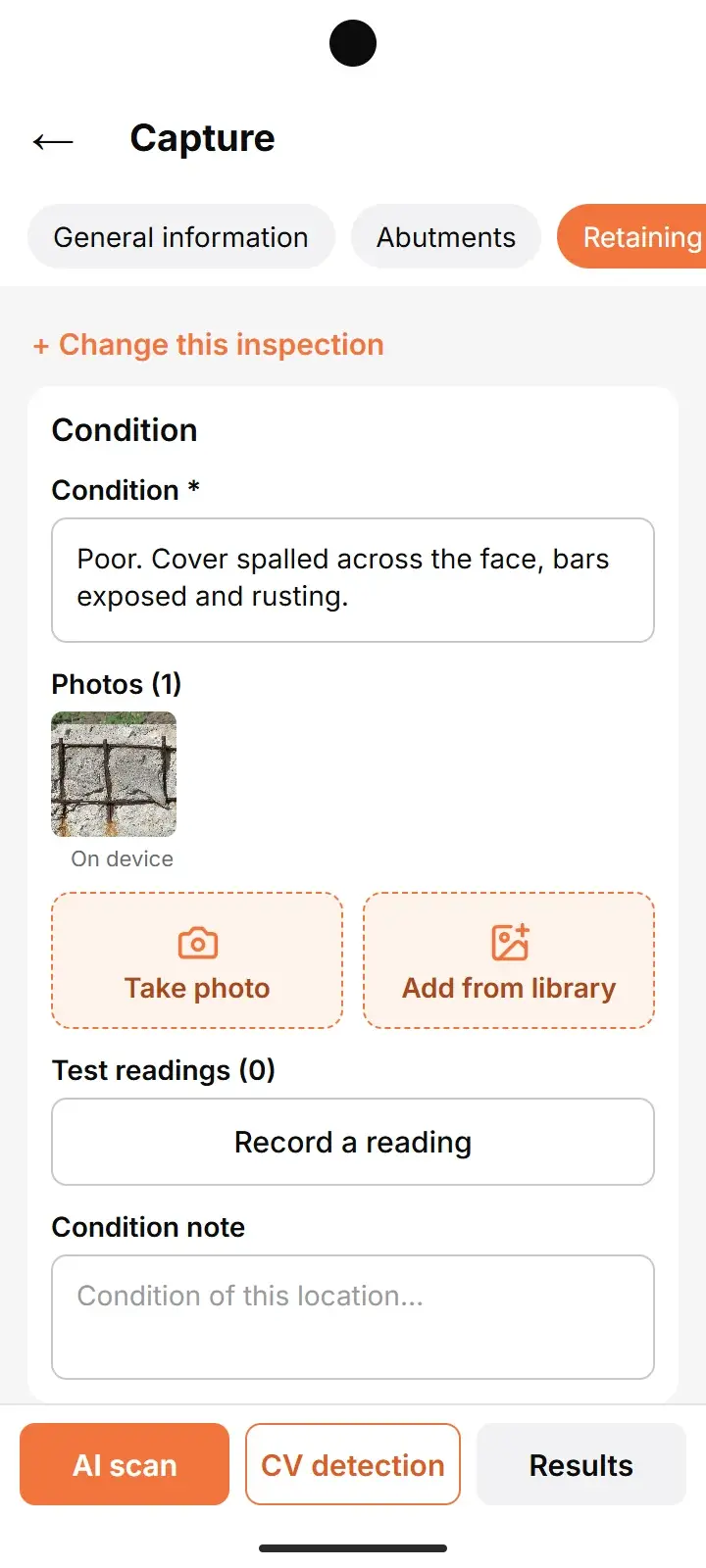
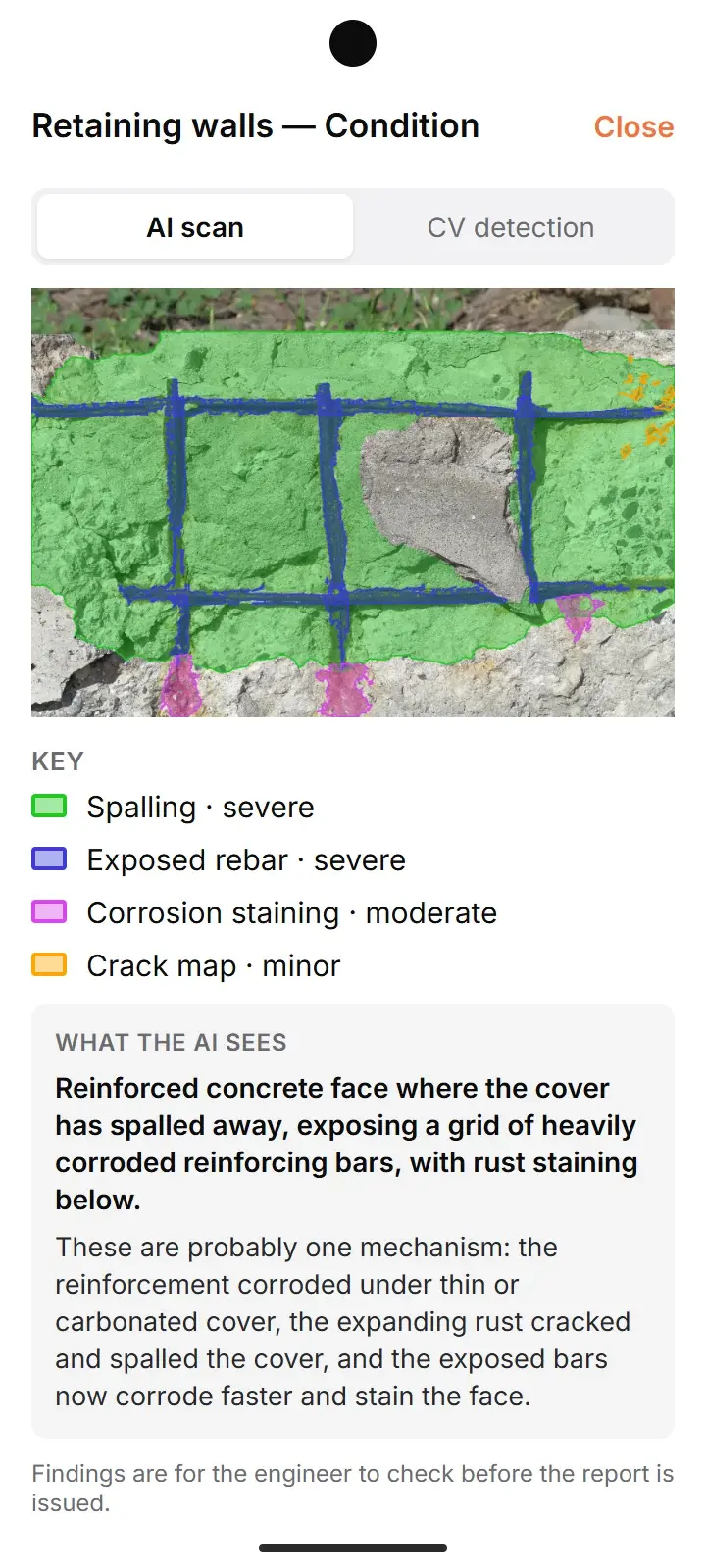
Your inspectors work through your firm’s inspection form on an Android phone, photographing each defect against the element it belongs to. The app keeps working without signal and uploads when they are back in range. AECAI then flags the defects it finds on each photograph, for your engineer to check.
The Android app is in early access. Capture also works in a browser.

| Finding | Raised by | Your engineer |
|---|---|---|
| Crack, north face | AI | Accepted |
| Spalling, north face | AI | Accepted |
| Staining, pier cap | AI | Rejected |
| Debris, bearing shelf | Engineer | Added |
You decide what goes in the report.
AECAI drafts. Your engineers accept, reject or add findings and can edit any text. When the report is ready, download it as Word or PDF and issue it under your firm’s name, the way you do today. AECAI is the software that drafts it; the report, and the judgement in it, stay yours.
Reports in your firm’s own style.
AECAI reads your past reports and turns your house style into drafting rules, without copying their findings. It can also turn an old report into an inspection form, so your engineers capture what your reports need. Reports come out as Word or PDF, in the format your clients already know.
Your past report
4.1 Deck
4.2 Bearings
AECAI’s draft
4.1 Deck
4.2 Bearings


The engineer who writes the reports and the engineer who trained the models.
Sammy Gawad is a civil engineer who writes the reports AECAI drafts. Mohamed Ragab is a structural engineer turned AI researcher who designed and trained AECAI’s defect models. We built AECAI for engineering firms of 5 to 50 people.
From site to finished report.
See the full workflow- 1
Capture
Your inspectors record observations and photographs against your form, each photo tied to its element, on the Android app (early access) or in a browser.
- 2
Analyse
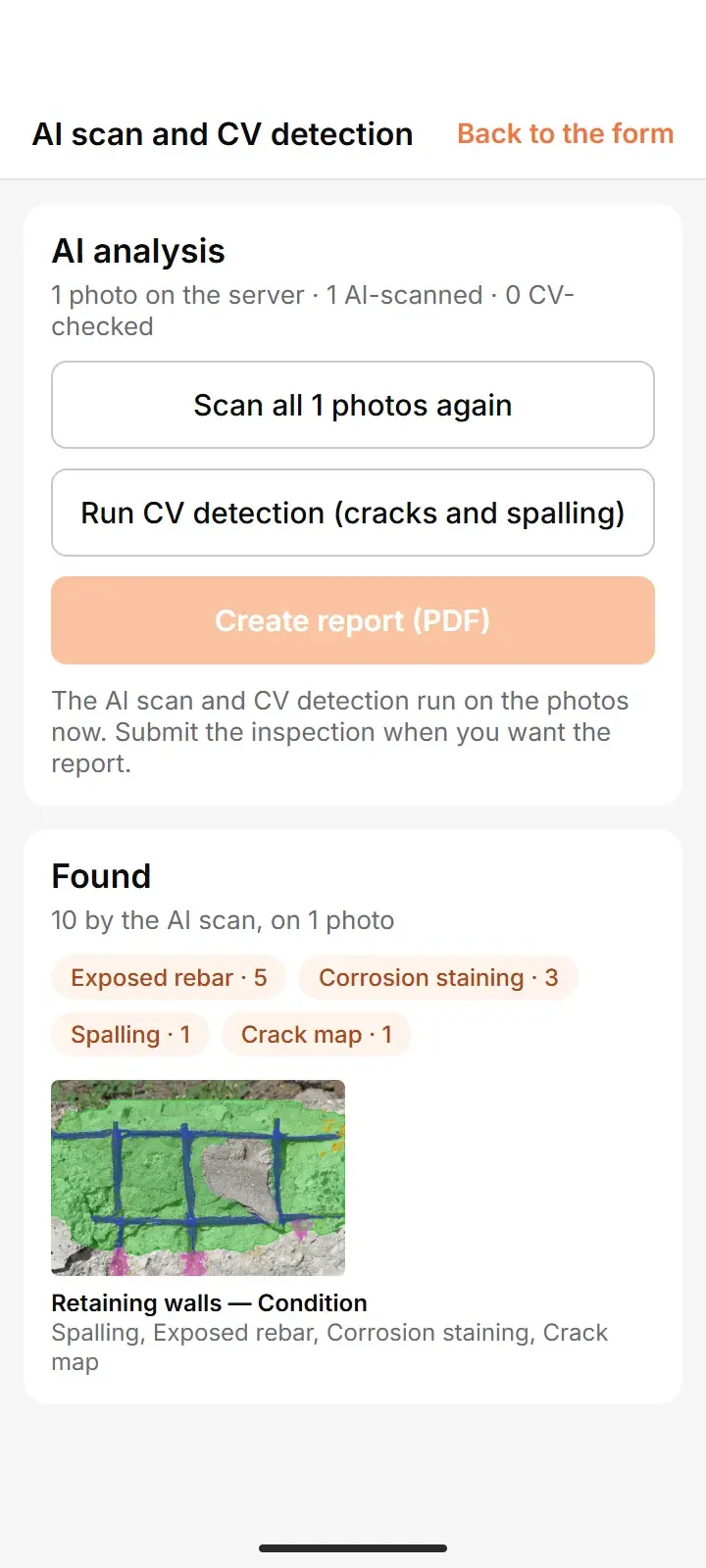
Computer vision outlines cracks and spalling. AI Scan suggests other defects for your engineer to check.
- 3
Review
Your engineer accepts, rejects or adds findings.
- 4
Report
Report Studio drafts the report in your house style, ready to download as Word or PDF.
AECAI is in early access.
We are taking on a small number of Northern Ireland firms for a free pilot. It starts with a demo, so you can see the whole workflow before you decide.
See AECAI working.
Try the whole workflow, from site photographs to a finished report, on example data. The pilot is free, including an allowance of AI use.